
Hair loss. Those two words are enough to send shivers down many of our spines. It’s not a fun topic to talk about, but it is one that impacts a majority of us. According to Harvard Health Publishing, “about one-third of women experience hair loss (alopecia) at some time in their lives; among postmenopausal women, as many as two-thirds suffer hair thinning or bald spots.”

With the rise of GLP-1s, that percentage may even be higher, especially with many experiencing hair loss as a side effect of the medication.
For hairstylists, it can feel difficult or like you’re overstepping talking about hair loss with your clients. But chances are, your clients want you to talk about it with them. After all, some of the clients you have might be part of the 30% suffering from some form of hair loss currently. Lucky for you, Babe is here to help. Not only do we offer solutions with our extensions (à la Wefts, Fusions, and I-Tips), but we’re also here to give you the tips to have those tough conversations. Read on for your guide to talking with clients about hair loss!
Hair Loss Is More Common Than We Think
Again, hair loss is more common than people realize, even in women. The Cleveland Clinic shares that there are 3 main types of hair loss in women:
- Androgenetic Alopecia (or Female Pattern Hair Loss): The most common type, where hair thins over the top of your head and on the sides
- Anagen Effluvium: Commonly caused by medications because they compromise a growing hair follicle
- Telogen Effluvium: An increased number of hair follicles reaching the telogen phase causes this type of hair fall

But what causes these types of hair loss? Here are a handful of the most common reasons for hair fall:
- Weight Loss: Calorie restriction and physical strain can push the hair follicles into a premature shedding phase
- Stress: It disrupts the hair’s natural growth cycle by pushing hairs into a resting and shedding phase
- Medications: Certain medications can force the hair follicles into a resting or shedding phase prematurely
- Hormonal Changes: Various hormone changes in the body can push the hair into a resting phase, leading to little or no growth
- Seasonal Shifts: With the change in seasons, you may notice more or less shedding
Now that you have this information as a starting point, let’s dive into how you can make an impact.
Stylists Don’t Have to “Fix” Hair Loss to Make an Impact
Though you now have basic knowledge of hair loss (and maybe you have even more), you are not a medical expert. That’s not to discredit what you can do for your clients, because you are still a confidence-builder and trusted advocate. This is just to note that the root cause of hair loss may be outside of your scope to deal with. However, you still play an important role in helping your clients feel beautiful during these transitional periods.
Education Creates More Compassionate Consultations
The more you understand hair loss, extensions, and your client, the easier it is to have honest conversations with them. We wanted to debunk some myths you may hear when recommending extensions to your clients.
Myth #1: Extensions Cause Hair Loss
Professionally applied extensions do not cause hair loss when they are applied correctly and maintained properly. In fact, they can actually help with hair growth. They act as a form of enhancement while your natural hair takes its time to grow out. Plus, there’s an added confidence boost during the regrowth process.
Myth #2: Extensions Are Only for People Who Want Really Long Hair
People desire hair extensions for a variety of reasons, not just for length. Many people who wear short haircuts such as bobs or lobs will use Tape-Ins for added volume. Some people will use Fusions for a pop of color without using bleach.
Myth #3: Hair Extensions Look Fake
With proper application, hair extensions look natural and seamless. Especially with Fusion and I-Tips, they’re difficult to spot with the naked eye. Not even clients will be able to find them after you install them.

Babe also uses 100% Virgin Remy human hair, which provides a more natural-looking, seamless finish than other extension brands on the market.
The Best Babe Extension Methods for Thinning Hair
Babe offers unique solutions for your clients who are experiencing the different types of hair loss. Here are the best methods for hair loss and when they should be used:

Hybrid Weft (a.k.a. Genius Weft)
Babe’s thinnest application method, it compensates for volume loss by providing natural-looking density. Plus, it doesn’t add extra stress to the scalp because it’s a lightweight method.
The Hybrid Weft is great for clients who have lost a bit of density and need an extra volume boost.
Fusion
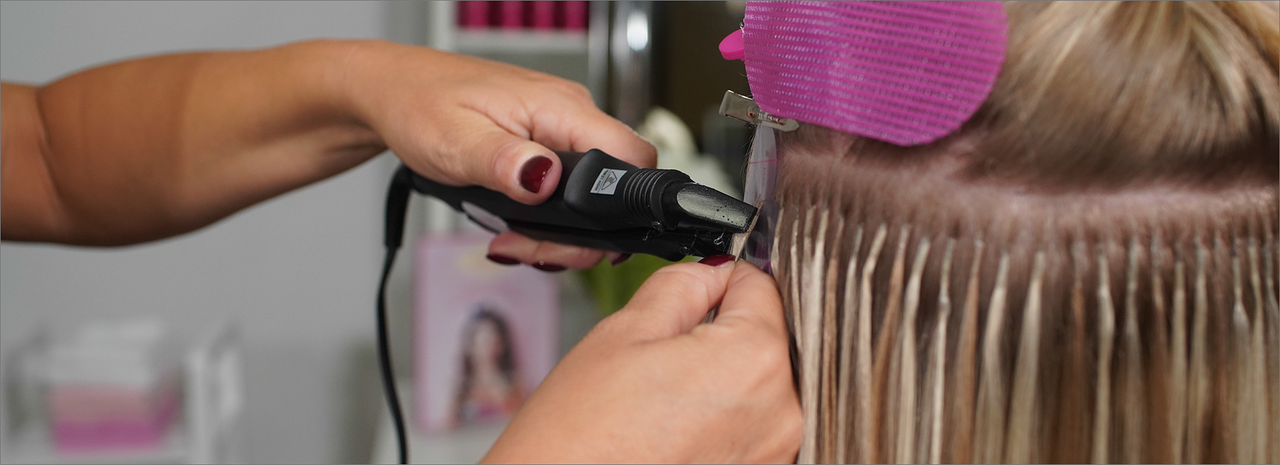
So discreet, you won’t know they’re there. This keratin bond method offers long-lasting and low-maintenance wear that is custom applied for each client’s needs.
Fusions (K-Tips) can be customized into micro bonds that are gentler on fine, compromised hair, allowing for placement in highly visible areas that tend to show signs of thinning first, like our temples and hairline.
I-Tip
These lightweight beaded extensions offer 360-degree movement so clients can wear ponytails, buns, and other styles comfortably. I-Tips are ideal for clients who may have to take a break from color or chemical services but still want dimension.
Discreet and precise, this application is ultra gentle for fine/thinning hair due to the beaded method that doesn’t use heat or adhesive.
Final Thoughts on Helping Clients With Hair Loss
Hair loss can feel daunting, but with you by their side, clients will be grateful for your knowledge and expertise as you guide them through their journey. Be honest with them that you cannot solve the root cause, but you can aid them with extensions to help hide hair loss and potentially help with hair regrowth.
